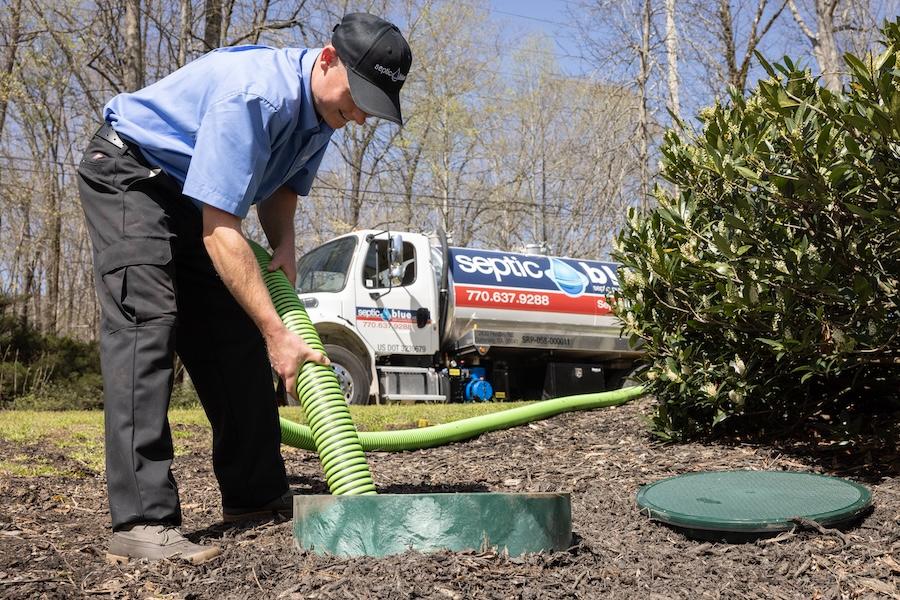
What is septic tank pumping?
Septic tank pumping is the removal of built-up solids from your septic tank using a vacuum truck. Over time, heavy sludge settles to the bottom and a scum layer floats on top. Pumping clears these layers so your system has room to separate and treat wastewater properly.
Inside every tank, bacteria break down waste, but they can never consume it all. The leftover sludge and scum steadily accumulate and must be physically pumped out.
When those layers are never removed, solids eventually escape into the drain field, where they clog the soil and cause expensive failures. Routine pumping is the single most important thing you can do to protect your septic system.
- Removes sludge and scum the bacteria cannot break down
- Protects your drain field from clogging
- Keeps wastewater flowing away from your home
- Extends the overall life of your septic system
How often should you pump your septic tank?
Most households should pump their septic tank every 3 to 5 years, but the exact interval depends on your household size and tank capacity. A larger household producing more wastewater fills a tank faster, while a bigger tank buys more time. Use the table below as a general guide.
A typical residential septic tank holds between 1,000 and 1,500 gallons. The more people living in the home, the faster solids accumulate relative to that capacity.
These intervals are industry guidelines. Garbage disposals, high water use, or extra laundry can shorten them. When in doubt, call us at (989) 205-6017 for a straight answer.
| Household Size | Typical Tank Size | Recommended Pumping Interval |
|---|---|---|
| 1-2 people | 1,000 gallons | Every 4-5 years |
| 3-4 people | 1,000-1,250 gallons | Every 3-4 years |
| 5-6 people | 1,250-1,500 gallons | Every 2-3 years |
| 7+ people | 1,500+ gallons | Every 1-2 years |
What is the septic pumping process?
Our technician locates and uncovers your tank's access lid, inspects the sludge and scum levels, then uses a vacuum hose to pump out all contents. The job usually takes 20 to 60 minutes. We finish by checking the tank and baffles, then securing the lid.
We arrive with a dedicated vacuum truck and locate your tank access. Older systems may require light digging to reach a buried lid.
Once open, we measure the sludge and scum so we can advise you on your next interval. Then we pump the tank completely, not just the liquid off the top, which is the only way to truly reset your system.
Before we leave, we do a quick visual check of the tank walls and baffles for obvious issues and haul everything away for environmentally responsible disposal.
- Locate and uncover the tank access lid
- Measure sludge and scum levels
- Fully vacuum out all tank contents
- Inspect tank walls and baffles
- Secure the lid and dispose of waste responsibly
What are the warning signs your septic tank is overdue?
Slow drains throughout the house, sewage odors indoors or outside, gurgling pipes, and pooling water or unusually lush, green grass over the drain field all signal an overdue or failing tank. If you notice any of these, stop running water and call us right away to avoid a backup.
These symptoms mean solids may be reaching your drain field or the tank is simply full. Acting early is far cheaper than cleaning up a sewage backup.
Reliable Septic offers 24/7 emergency service across the Great Lakes Bay Region, so you are never stuck waiting when things go wrong.
- Slow drains in multiple fixtures
- Sewage odors inside or near the tank
- Gurgling sounds from toilets or drains
- Pooling water or soggy ground over the drain field
- Unusually lush, green grass above the system
- Sewage backing up into drains or toilets
What is included in a septic pumping service?
Every Reliable Septic pumping includes locating and opening your tank, measuring sludge and scum, fully vacuuming all contents, a visual inspection of the tank and baffles, resealing the lid, and responsible disposal of the waste. You get clear, upfront pricing with no hidden fees before we start.
We believe in honest, no-nonsense service. You will know what the job costs before we begin, and we will tell you plainly if we spot anything that needs attention.
As a fully licensed and insured Michigan septic team, we handle every step so you do not have to worry about permits, equipment, or disposal.
- Tank location and access
- Sludge and scum level assessment
- Complete removal of all tank contents
- Visual inspection of tank and baffles
- Environmentally responsible waste disposal
- Clear, upfront pricing with no hidden fees
Frequently Asked Questions
How long does septic tank pumping take?
How do I know what size my septic tank is?
What happens if I never pump my septic tank?
Can you pump my tank in an emergency?
Do I need to be home during the pumping?
Does pumping remove everything from the tank?
What areas do you serve for septic pumping?
Will pumping fix my slow drains?
Trusted Septic Resources
Homeowner guidance from authoritative sources on septic system care, maintenance, and Michigan regulations: