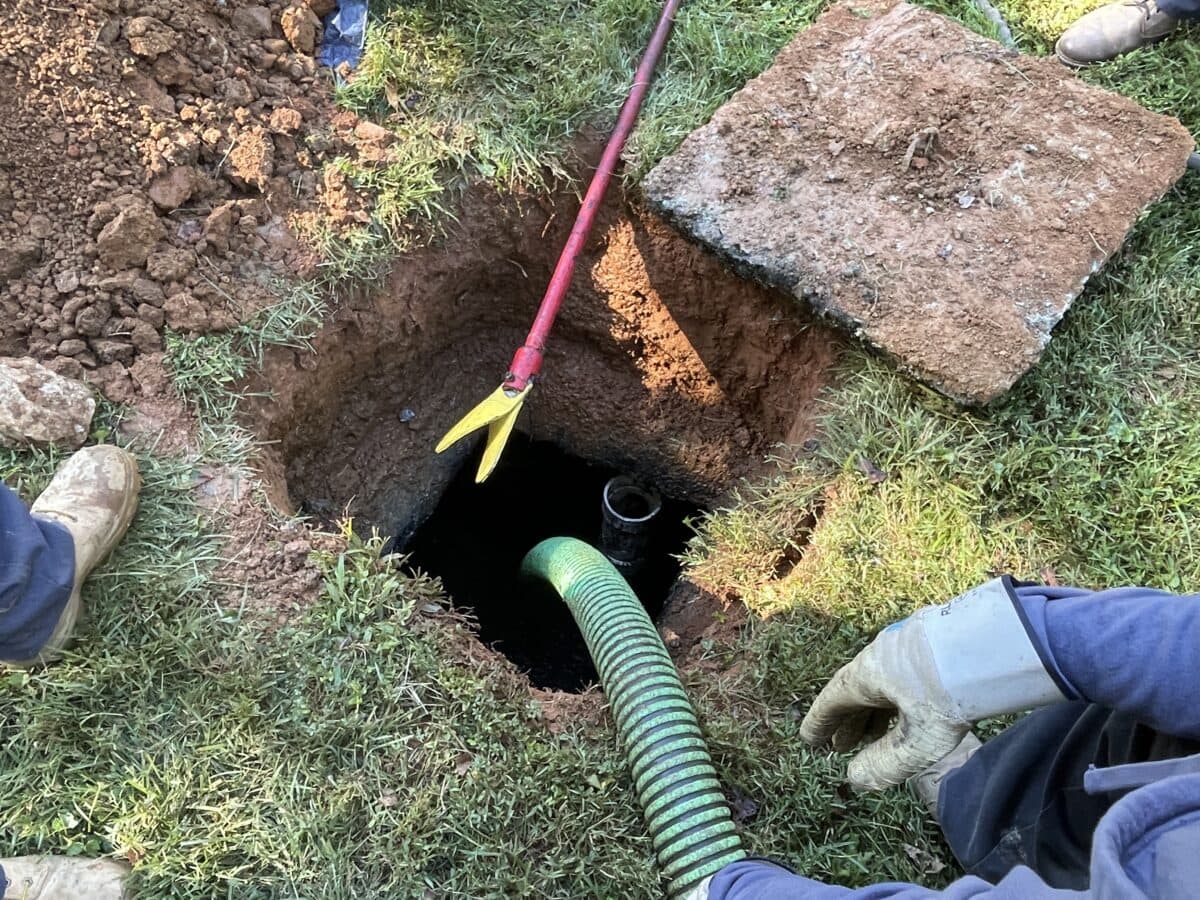
What is septic tank cleaning?
Septic tank cleaning is the complete removal of everything inside your tank: the floating scum layer, the liquid effluent in the middle, and the heavy sludge settled on the bottom. Unlike a routine pump that mainly draws off liquid, a full cleaning clears the solids that cause backups and system failure.
Over time, solids separate into layers. Grease and lighter materials float to the top as scum, while heavier waste sinks and compacts into sludge at the bottom. The clearer liquid in between flows out to your drain field.
When those solid layers grow too thick, they can travel into the drain field and clog it, leading to expensive repairs. A thorough cleaning resets your tank so it works the way it was designed to.
- Removes the top scum layer completely
- Pumps out liquid effluent
- Clears compacted bottom sludge
- Lets our crew inspect the tank interior
- Protects your drain field from premature clogging
Pumping vs. full cleaning: what's the difference?
Pumping primarily removes the liquid and loose waste so your tank can keep accepting flow. Full cleaning removes all three layers, including the hardened sludge pumping often leaves behind. Cleaning takes a bit longer but gives your system a true fresh start, especially for tanks overdue for service.
Both services matter, and the right choice depends on how long it has been and the condition of your tank. For many homes a standard pump every few years is enough, but neglected or heavily used systems benefit from a full cleaning.
Our Mid-Michigan crew will tell you honestly which service your tank needs. No upselling, no hidden fees, just straight answers.
| Factor | Septic Pumping | Full Septic Cleaning |
|---|---|---|
| What's removed | Liquid and loose floating waste | Scum, liquid, and compacted bottom sludge |
| Sludge handling | Some sludge may remain | Bottom sludge fully cleared |
| Typical time on site | About 20-40 minutes | About 30-60 minutes |
| Best for | Routine maintenance on schedule | Overdue tanks or recurring issues |
| Effect on drain field | Reduces strain | Maximizes protection |
Why does removing sludge and scum matter?
Sludge and scum are the root cause of most septic failures. When these layers build past safe levels, solids escape into the drain field, clog the soil, and can force sewage back into your home. Removing them protects your drain field, prevents backups, and extends the life of your entire system.
A drain field clogged by escaped solids is one of the most costly septic repairs a homeowner can face. Regular cleaning is far cheaper than replacement.
Keeping the scum and sludge in check also keeps your tank's bacteria balance healthy, which helps it break down waste efficiently between services.
- Prevents solids from reaching and clogging the drain field
- Reduces the risk of sewage backups indoors
- Keeps the tank processing waste efficiently
- Extends the service life of your septic system
- Supports environmentally responsible wastewater handling
When should you schedule septic tank cleaning?
Most households should have their septic tank serviced every 3 to 5 years, though larger families or smaller tanks may need it sooner. Beyond the calendar, schedule cleaning right away if you notice warning signs like slow drains, odors, or pooling water, since these often mean the tank is overdue.
A typical residential tank holds 1,000 to 1,500 gallons. The more people in the home and the smaller the tank, the faster solids accumulate and the more often you'll need service.
If you're not sure when your tank was last serviced, it's worth a call. Our team can inspect it and recommend a sensible schedule for your household here in the Great Lakes Bay Region.
- Slow or sluggish drains throughout the house
- Sewage odors inside or near the tank
- Pooling water or unusually lush grass over the drain field
- Gurgling sounds from pipes or toilets
- It has been more than 3-5 years since the last service
What happens during a septic cleaning visit?
Our crew locates and opens your tank's access ports, then uses a vacuum truck to remove the scum, liquid, and sludge while agitating stubborn solids. We inspect the tank's interior and baffles, confirm everything is clear, and dispose of the waste responsibly. Most residential visits take between 30 and 60 minutes.
We come prepared with the right equipment to handle tanks of all sizes across Saginaw, Midland, Bay City, Freeland, Bridgeport, and Vassar.
Because we're fully licensed and insured in Michigan and committed to environmentally responsible disposal, you can trust the job is done right and handled safely from start to finish.
Frequently Asked Questions
How often should a septic tank be cleaned?
Is septic cleaning the same as septic pumping?
How long does a septic tank cleaning take?
What are the signs my septic tank needs cleaning?
What size is a typical residential septic tank?
What happens if I skip septic tank cleaning?
Do you offer emergency septic cleaning in Mid-Michigan?
How much does septic tank cleaning cost?
Trusted Septic Resources
Homeowner guidance from authoritative sources on septic system care, maintenance, and Michigan regulations: